
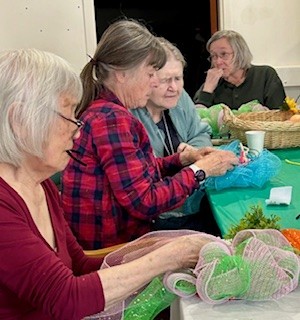
Read an article in the Astorian newspaper regarding Caregiving which features Clatsop Care Retirement Village. https://dailyastorian.com/2026/03/04/caregiving-dignity-heart-and-second-beginnings/
Caregiving with dignity, heart and second beginnings Published 12:47 pm Wednesday, March 4, 2026 By Aislin Tweedy
In the second-floor lounge at Clatsop Care Retirement Village, Christine Bivens leans down to steady a resident rising from her chair. The woman sways slightly, then breaks into a grin. “There you go,” Bivens says gently, guiding her toward the hall. Bivens calls for the second floor caregivers to guide the resident down for lunch. Around them, walkers click against tile, arms link in support and the chatter of more than 60 seniors fills the air. For Administrator Ann Rubino, moments like this are why she does her work. “Instead of bringing them here to die,” Rubino said, “we actually bring them here to live.”
The retirement village in Clatsop County, houses 63 residents in 69 apartments. Units range from 500 to 800 square feet and include studios, one-bedroom and two-bedroom layouts. Six couples live here. The average age is 83. One resident is 103. People arrive for a number of reasons: dementia, chronic illness, physical disabilities, injuries that make living alone unsafe. Some need help managing medications. Others require full assistance with daily tasks. Staff members help residents wake up, bathe, dress, eat and move — safely — throughout the day. They coordinate physical therapy appointments and monitor health changes. But, said Rubino, caregiving extends beyond the physical.
“We take care of them from top to bottom,” she said. “Their spirituality. Their mentality. We try really hard to keep them happy and motivated to live.” From housekeeping to leadership Bivens has worked in the district for 31 years. She spent five years at Clatsop Care Center, the village’s sister facility, before transferring to the retirement village 26 years ago.
She began at age 21 in housekeeping. Within a year or two, supervisors encouraged her to take a certified nursing assistant course. She became a CNA, later trained as a medication technician, and eventually moved into leadership. Today, she serves as resident care coordinator (RCC.) “There’s always room to grow in a job like this,” Bivens said. “I went from housekeeping to CNA to med tech to RCC. But I never want to be an administrator. Or the nurse. Nope. I’ll stick where I’m at.” Bivens oversees nearly every aspect of care. She manages assessments, admissions and care plans, ensures medications are properly charted, and supports other staff members across shifts. When needed, she fills in on the floor. “We get our hands dirty, too,” Bivens said. The building has nursing coverage Monday through Friday, with a nurse on call 24/7. One RCC is always on duty during weekends. “You definitely have to have the heart to work in a place like this,” Bivens said. “A lot of people can do it. And a lot of people just cannot.” What keeps her there after three decades are the residents themselves. “I really like hearing their stories,” she said. “And just being part of their everyday life.” Some residents have no nearby family. Others rarely receive visitors. Staff members often become their closest connection. “It’s kind of nice to be that person who can be there for them,” Bivens said. “Getting smiles on their faces. Getting them to laugh. There’s more to caregiving than the daily tasks we do.” More than medical care Caregiving often means tending to grief and separation as much as physical decline. Rubino recalled a couple who moved in. The husband had to delay his arrival because he had entered a rehab in Portland. His wife, who has dementia, arrived first. Every day, staff members found her standing in the doorway, crying for him. She feared he had left her. Meanwhile, In Portland, he repeatedly asked about his wife. When he finally arrived, Rubino watched them reunite. “It was so special and so sweet,” she said. “It’s not just about their bodies. … It’s about their hearts.” Many residents grieve the loss of their homes, leaving behind places where they raised families or built decades of routines. Downsizing often means parting with furniture and keepsakes that defined their identity. “You lose a part of who you are as a person when you have to leave all that behind,” Rubino said. To ease the transition, staff members invite prospective residents to lunch and encourage them to meet neighbors during tours. The facility conducts a 25-page assessment evaluating medical needs, mobility, habits and preferences. Families do not always understand when a higher level of care is required for their loved ones, Rubino said. Adult children sometimes believe a parent can manage just fine independently, only for staff members to discover otherwise. “Mom’s not 3 — she’s 83,” Rubino said. The weight of the work Like many senior living facilities, the retirement village faces staffing challenges. The work is physically and emotionally demanding, and turnover can be high. Those who remain often form deep bonds with residents. During a recent Valentine’s Day celebration, a caregiver helped a former dancer stand and sway during happy hour. Other residents were moved by the sight and wiped away tears. “It gave her something back,” Rubino said. The facility hosts weekly happy hours, live music, art projects and presentations from local organizations. Often, high school students volunteer one-on-one with residents for senior projects. Head Start students visit to sing and read. Every interaction creates connections. “A lot of these kids don’t have grandmas and grandpas like we did,” Rubino said. “The intergenerational activities are the best.” What families need to understand National Caregivers Day fell on Feb. 20, but Rubino hopes families reflect on the realities of aging more than one day a year. Bodies do not always rebound quickly from a bone break or surgery, and loved ones often don’t realize that aging can be a big part of that equation. “Sometimes Mom just doesn’t have it in her to get any better,” Rubino said. “She’s terrified she’s going to fall again.” The retirement village plans to launch a family council in the near future to educate relatives about caregiving and recovery expectations. Staff members will also share practical tips so families feel more confident taking loved ones out for visits. By the time many residents move in, family caregivers are exhausted. “They’ve already done all the care at home,” Rubino said. “They’re frustrated.” Both Bivens and Rubino said patience makes the difference. For some residents, moving into the retirement village is not an ending, said Rubino. “It’s really where life begins again.”
Read more at: https://dailyastorian.com/2026/03/04/caregiving-dignity-heart-and-second-beginnings/